Terrors Shall Drive Him

Terrors shall make him afraid on every side, and shall drive him to his feet.  -Job 18:11

When it gets dark I begin to worry in earnest.

A quick trip to the shopping center usually takes all of two hours, but it’s now closer to six.

For the tenth time I check to see my ringer is on.

I have called her a dozen times.

She never empties out her voicemail so the inbox is full and I can’t leave a message.

I see this a small act of rebellion.

Fine.

I roll over and plug my chair into the charger,  positioned so I can look out the window.

I watch the cars go by, none hers.

Friday Fictioneers

Not If, When

Clive and me always planned on retiring to Spain or Majorca someday. Someplace warm, anyway.

Maybe planned is too strong a word.

More like wished, since the pay of a London  cabbie don’t go as far as it once did.

All this changed when he come back to the flat after work with  an expression on his face I’d not seen before.

Sort of a mix of triumph and fear.

He was holding a black leather Gucci satchel that probably cost more than a month’s rent.

“What’s this, then?” I asked. “Been shoplifitng?”

“Fare to Gatwick,” he said. “Couple South American blokes having a row in Spanish. Almost come to blows, they did. Left this on the floor. My next passenger put his feet right on top of it.”

He set the bag on the coffee table. “Open it.”

I was afraid, then. That look on his face.

“Go on,” he said. “Open it.”


What Pegman Saw

inlinkz frog


Led to the Noose in Diapers

I was in town and arranged to meet him for tea.

He looked older. We all did.

He rose to shake my hand. “Haven’t seen you since Toyko,” he said with a trace of a smile.

I’d been one of those tasked with the delivery system. His job was the chemistry, Others in the group had different jobs. We’d all been young idealists, intelligent yet so easily manipulated by Asahara.

Eventually we got around to the subject.

“You read about the execution?”

“Watched a YouTube of it. Ghastly.”

“Do you ever miss him?”

“Asahara Shukun? No. But sometimes I miss his certainty.”

Friday Fictioneers

Shoko Asahara claimed to have achieved enlightenment in the Himalayas and preached an esoteric mix of various Eastern religions combined with his own apocalyptic prophecies.

His followers claimed their guru, who dressed in Chinese-style pajama tunics, had extra-sensory powers and could levitate for hours at a time.

On March 20, 1995 Aum Shin Rikyo released sarin at several points across the Tokyo subway during the morning rush hour.

The attack shocked the world and prompted a massive crackdown that saw Asahara and some of his followers arrested.

Ashara was imprisoned, refusing in his final days to bathe or use the toilet. He was hanged in July, 2018.


The Middle Kingdom

Old Liao spent most of his hours watching the trains through the window.

He ignored his grandchildren’s noisy inattention as they ran around the apartment with their phones and music.

He remembered how he had respected his own grandmother, a raisin-faced woman whom none in his village could remember ever being young.

Liao watched a locomotive pulling a string of cars that stretched beyond the horizon. This world so different than his childhood, the Communist school taught  in a mountainside shack, the iron pots of barley gruel cooked over charcoal, Mao’s soldiers in muddy green coveralls and red-star caps.

Different even from when as a young man he came to the hungry city of shovels and saws, twelve-hour days pouring concrete and laying tile.

He smiled and pulled his shawl close around his shoulders, felt his bones beneath the skin of his wrists.

None of these children could imagine him being young either.

What Pegman Saw: Xinhua China

inlinkz frog

The Winter Father

Her mittened hand felt small and cold in his.  Even though the wool hat hid her face he knew she was crying.

“Two more times around, honey,” he said, voice almost obscenely cheerful. “Then we can go get some cocoa.”

Twice more they made their laborious way around, her ankles splaying birdlike despite the heavy leather of the skates.  Other skaters whirred past as they struggled. He knew it was tough, perhaps even cruel, but he could not become one of those weekend Santa-daddies who taught their children nothing.

Over the promised cocoa she stared at the park with hatred.


Friday Fictioneers

Captains All

The Host stood at the entrance and surveyed his guests with a mixture of amusement and satisfaction.

Aside from their gender, the men seated around the long cherrywood table had certain things in common.

Each was one of the wealthiest and most powerful individuals in the world, and each was an American.

They might well have been in any business meeting, save for the grotesque mask each of them wore.

These had been chosen especially by the Host to give a subtle clue to the wearer’s identity while revealing nothing precise.

The head of the world’s largest oil company, a man of Saudi descent, wore the mask of a multi-eyed insect.

The young  social media titan was a curved-beak vulture, and so on.

“You will pardon the secrecy, gentlemen,” said the Host.  “It is for your own protection, and mine. What we discuss here will affect the future of all humanity, and in fact will likely  determine whom humanity itself will consist of.”


What Pegman Saw: Delaware

Note: Over a million businesses—more than 50 percent of publicly traded companies in the U.S. and more than 60 percent of Fortune 500 companies—are incorporated in Delaware.  Among the reasons for this are the “Delaware loophole” which allows companies to declare certain types of revenue in Delaware rather than in the state where the business actually occurred, and the fact that Delaware also doesn’t tax profits on royalty payments, trademarks, or copyrights. The Obama administration sought to pass laws to hold these corporations accountable for fair tax liability, but efforts were successfully staved off by the Republican-controlled House and Senate. It comes  as no surpise that the Trump administration has reversed and eliminated all such provisions.

Legacy of Ash

She folded the funeral shawl and set it between sheets of peeled cedar to protect the peerless black cashmere from moths,

She thought how the smell of cedar had come to mingle in her mind with the tastes of loss and grief. Her brother, her mother, her husband, and now David.

From the freezer she took the pint of ice cream she’d bought to surprise him when he came home from hospital this time, his favorite flavour she’d so long forbidden for fear of diabetic consequences.

She held it cold in her hand, then put it back in the freezer.

Friday Fictioneers

Bloody Hell

Corporal Cobbs rode into the camp, his mare lathered by the hard going.

Sergeant Collinsworth stood to unlatch the gate. He nodded as Cobbs led in the long column of prisoners, the other men of the platoon riding alongside the ragged group like drovers, calling out to keep them moving.

Cobbs dismounted and limped over. “I counted sixty-five of ’em, Sergeant,” he said. “But probably a good idea to count ’em again. Might’ve left a few back there.”

“Escaped?” asked Collinsworth.

Cobbs grinned. “Doubt any of these buggers have the spirit. More likely slipped off the trail to have a kip. Or die, maybe.”

The sergeant surveyed the prisoners. He judged them the sorriest lot yet.  Dirty dresses on the women,   threadbare coats on the old men. Some of the children had no shoes. No young men at all.

“Bloody hell,” he said, scratching his head. “Where are we going to put them all?”

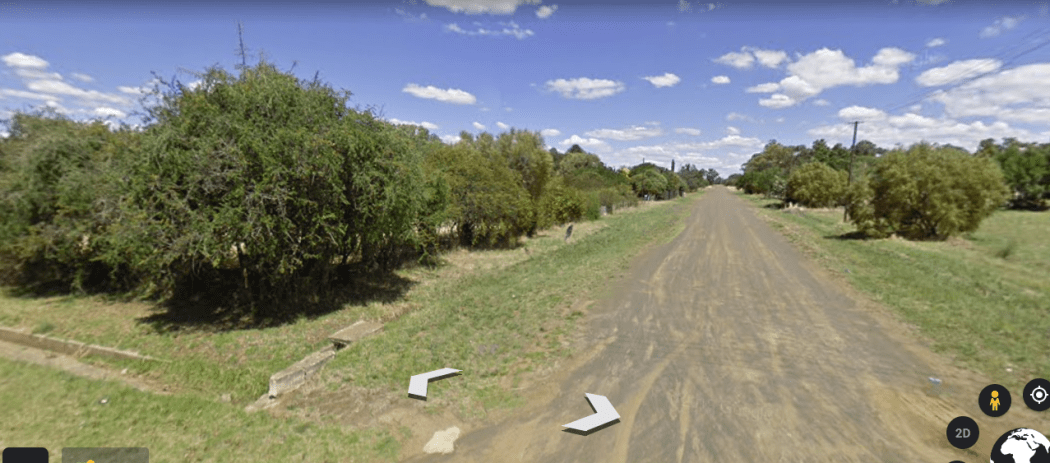
What Pegman Saw: South Africa

inlinkz frog

During the Second Boer War (1899-1902)  thousands of Boer farms were destroyed by the British under their “Scorched Earth” policy. This included the systematic destruction of crops and the slaughtering of livestock, the burning down of homesteads and farms, and the destruction or confiscation of all foodstuffs. The purpose was to prevent the Boer Commando forces from resupplying from a home base.

During this period, tens of thousands of women and children were forcibly moved into concentration camps, the first time in history that an entire nation was systematically targeted for total depopulation. Eventually, there were a total of 45 tented camps built for Boer internees and 64 for black Africans.

It almost goes without saying that the camps were poorly administered, all the more as they became increasingly overcrowded after Kitchener’s troops implemented the internment strategy on a vast scale. Conditions were terrible for the health of the internees, mainly due to neglect, poor hygiene, and bad sanitation. Thousands died of starvation and disease.

Photos of these prisoners are virtually indistinguishable from those of Nazi atrocities forty years later.

Still More Utopia

The arboretum was his gift to her, a sanctuary from the life-crushing city beneath.

“You deserve Utopia,” knowing full well she had not read, in fact would never read, the book for which such impossible places are named.

So it was not surprising she took it for granted, as she had the fox cubs, the Daimler, the summers in Switzerland.

She would say “the arboretum” as though it were a bedroom or hallway, a common thing found in even the most modest home.

Only when long illness confined her to the indoors did she come to fully appreciate his gift.

Friday Fictioneers


Remember

The night of Solstice, when the sky comes down to the ground and turns the world to snow, the old man gathers his grandchildren around the coal stove as the wind whistles and moans outside.

“The branches around us are hung with ghosts,” he croaks, the shadow of his hands sliding over the stone walls like demonic puppets. “At Kurapaty they came with machine guns and pistols, took the Jews and the friends of Jews from their homes, stood them against the trees and shot them all!”

The children, who have heard this story many times, pretend a shock they no longer feel.

Later, in bed, the young brothers whisper to one another.

“Why does he always tell that story?”

“He wants us never to forget.”

“Forget what? To hate Nazis? Who likes Nazis?”

“You boob. It wasn’t Nazis. It was Soviets. Weren’t you listening?”

“Nazis, Soviets. What’s the difference?”


What Pegman Saw: Belarus

inlinkz frog


Between 1937 and 1941,  the NKVD  (Soviet Secret Police under Stalin) carried out large-scale executions in the wooded lands of Kurapaty outside of Minsk. More than 7000 people, mostly Jews, were executed and buried in crude graves. The tragedy remained shrouded in Soviet secrecy until 1988, when a Belarus historian and one of the founders of the opposition Belarusian Popular Front party exposed what had happened.